About Talking
Every sound in every language is shaped airflow. The alphabet is a map of where in the mouth we choose to constrict that air. Click a point on the diagram to learn how each sound is born — and why European languages split the same glyphs into wildly different noises.
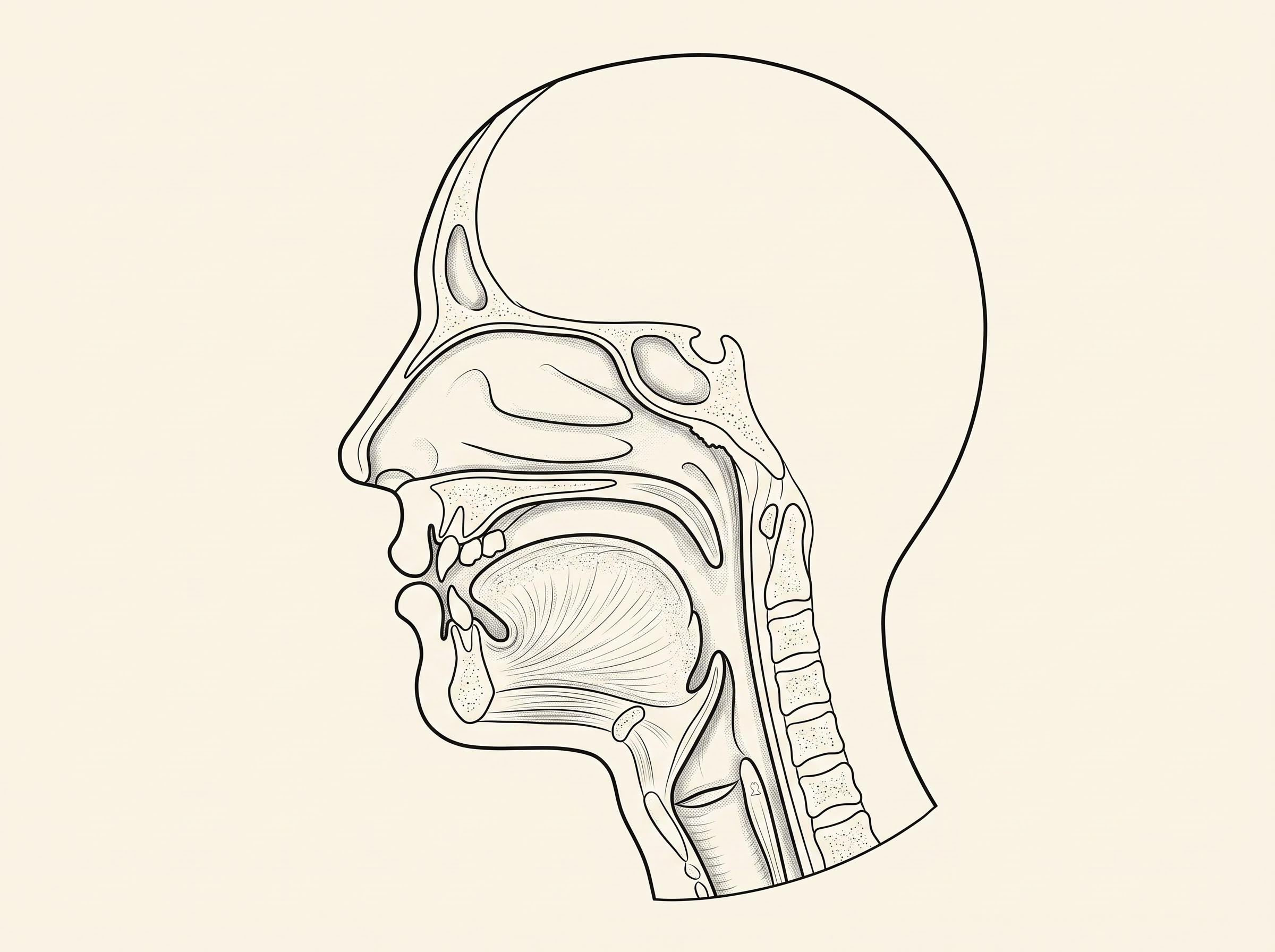
Bilabial — Both Lips Together
The lips meet and part. This is the most visible articulation in the vocal tract — you can watch it happen in a mirror. The two lips form a complete closure, then release: a stop. Or they hum with the velum lowered: a nasal. Or they round and narrow without touching: an approximant.
Heletter Pe (𐤐) — the mouth that scatters divine breath — became P and B. The lips that Hebrew used for the sacred act of dispersion were reduced to a mechanical pop. M (from Mem 𐤌, the water of resurrection) also lives here — the closed-mouth hum that once meant the passage through death to life.
The Hebrew letters were born in the deep throat — in the glottis and the pharynx, the most sacred regions of the vocal tract. As they moved west, articulation drifted forward in the mouth — from the glottis to the velum, from the velum to the palate, from the palate to the lips — and their meanings drifted forward into arbitrariness.