The Condition
Atherosclerosis is a chronic vascular disease marked by endothelial dysfunction, lipid accumulation within the intimal layer, oxidized LDL uptake by macrophages forming foam cells, and progressive plaque development that narrows the arterial lumen and predisposes to thrombotic events.
How the Plant Resolves It
Bioactive stilbenes and catechins inhibit macrophage uptake of oxidized low-density lipoproteins (oxLDL), preventing foam cell formation and halting the buildup of atheromatous plaques within arterial walls.
- 1.Stilbenes and catechins from grape and oak block macrophage uptake of oxidized LDL.
- 2.Without oxLDL ingestion, foam cells cannot form within the arterial wall.
- 3.Atheromatous plaque buildup is arrested before it narrows the vessel.
How Each Specimen Contributes
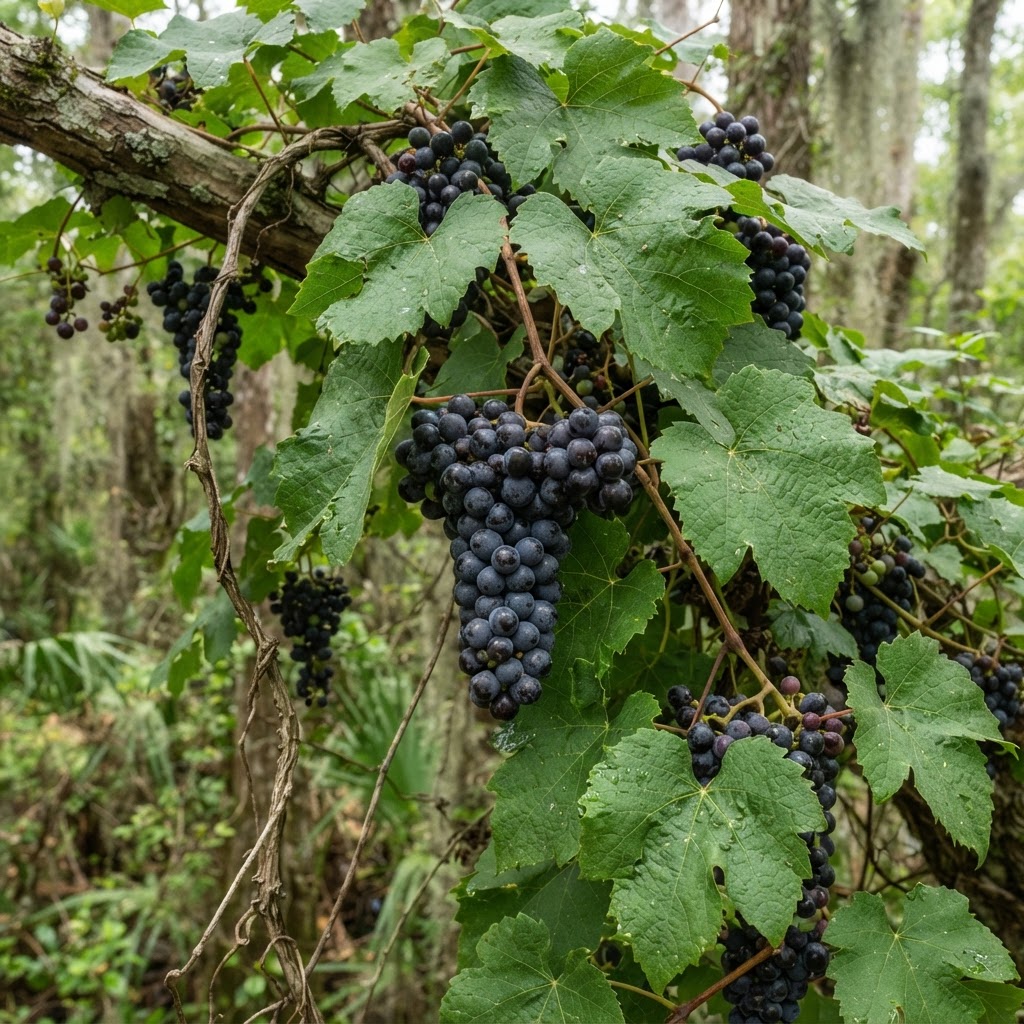
Mustang Grape
Resveratrol and viniferins inhibit macrophage CD36 scavenger receptor expression, blocking the uptake of oxidized LDL that initiates foam cell formation.
Muscadine Grape
Ellagic acid and quercetin suppress NADPH oxidase activity in the endothelium, reducing the oxidative environment that converts LDL to its atherogenic oxidized form.
Southern Live Oak
Ellagitannins inhibit vascular cell adhesion molecule-1 (VCAM-1) expression, preventing monocyte adhesion to the endothelial surface — the first step in plaque initiation.
Pine
Pycnogenol proanthocyanidins protect endothelial nitric oxide synthase from oxidative degradation, maintaining vasodilatory capacity and preventing platelet aggregation.
Black Tupelo
Quercetin and kaempferol inhibit the migration and proliferation of vascular smooth muscle cells that drive intimal hyperplasia and luminal narrowing.
Plant chemicals stop immune cells from eating damaged cholesterol and turning into greasy blockages inside your arteries.
Plants & Trees that treat it
Click any specimen to open its pharmacognostic monograph.
Academic Citations
- 1.Baur JA, Sinclair DA. Therapeutic potential of resveratrol: the in vivo evidence. Nat Rev Drug Discov. 2006;5(6):493-506.
- 2.Das M, Das DK. Resveratrol and cardiovascular health. Mol Aspects Med. 2010;31(6):503-512.
- 3.Scalbert A, Johnson IT, Saltmarsh M. Polyphenols: antioxidants and beyond. Am J Clin Nutr. 2005;81(1 Suppl):215S-217S.
- 4.Vita JA. Polyphenols and cardiovascular disease: effects on nitric oxide bioavailability. Am J Clin Nutr. 2005;81(1 Suppl):292S-297S.
- 5.Del Rio D, Rodriguez-Mateos A, Spencer JPE, et al. Dietary (poly)phenolics in human health. Antioxid Redox Signal. 2013;18(14):1818-1892.