The Condition
Cardiovascular disease encompasses disorders of the heart and blood vessels, including coronary artery disease, hypertension, and heart failure, driven by endothelial dysfunction, oxidative stress, lipid peroxidation, and chronic vascular inflammation.
How the Plant Resolves It
Polyphenols, stilbenes, and monoterpenes from woody species stimulate endothelial nitric oxide synthase (eNOS), increasing bioavailable nitric oxide (NO) to relax vascular smooth muscle, decrease systemic vascular resistance, prevent low-density lipoprotein (LDL) oxidation, and suppress endothelial inflammatory transcription factors such as COX-2 and iNOS.
- 1.Polyphenols and monoterpenes stimulate eNOS, releasing nitric oxide.
- 2.NO relaxes vascular smooth muscle and lowers systemic vascular resistance.
- 3.Stilbenes prevent LDL oxidation and suppress COX-2/iNOS inflammation.
How Each Specimen Contributes
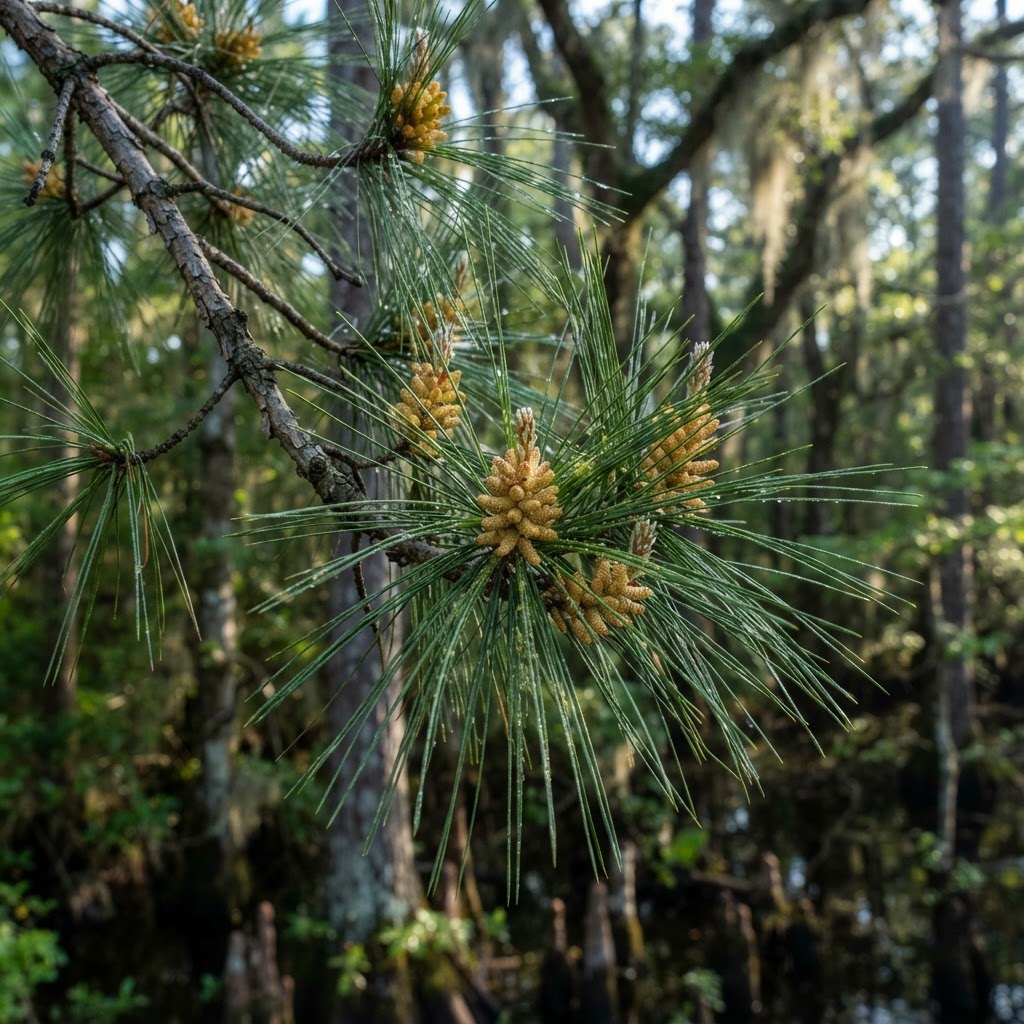
Pine
Pycnogenol stimulates endothelial nitric oxide synthase (eNOS) via PI3K/Akt signaling, increasing bioavailable NO to relax vascular smooth muscle and reduce systemic vascular resistance.
Mustang Grape
Resveratrol and viniferins inhibit NADPH oxidase, reducing superoxide production that scavenges NO, thereby preserving endothelium-dependent vasodilation.
Muscadine Grape
Ellagic acid and quercetin prevent LDL oxidation by scavenging peroxyl radicals, blocking the initiating event of atherogenesis.
Bald Cypress
Taxodione triterpenoids suppress COX-2 and iNOS expression in the endothelium, reducing the chronic vascular inflammation that destabilizes atheromatous plaques.
Southern Live Oak
Ellagitannins inhibit angiotensin-converting enzyme (ACE) activity, reducing angiotensin II–mediated vasoconstriction and cardiac afterload.
Plant compounds widen your blood vessels and reduce inflammation, making it much easier for your heart to pump blood without high pressure or blockages.
Plants & Trees that treat it
Click any specimen to open its pharmacognostic monograph.
Academic Citations
- 1.Baur JA, Sinclair DA. Therapeutic potential of resveratrol: the in vivo evidence. Nat Rev Drug Discov. 2006;5(6):493-506.
- 2.Vita JA. Polyphenols and cardiovascular disease: effects on nitric oxide bioavailability. Am J Clin Nutr. 2005;81(1 Suppl):292S-297S.
- 3.Das M, Das DK. Resveratrol and cardiovascular health. Mol Aspects Med. 2010;31(6):503-512.
- 4.Rahman I, Biswas SK, Kirkham PA. Regulation of inflammation and redox signaling by dietary polyphenols. Biochem Pharmacol. 2006;72(11):1439-1452.
- 5.Del Rio D, Rodriguez-Mateos A, Spencer JPE, et al. Dietary (poly)phenolics in human health. Antioxid Redox Signal. 2013;18(14):1818-1892.