The Condition
Cutaneous elastosis is the degradation of dermal elastin and collagen fibers driven by matrix metalloproteinase activity, ultraviolet radiation, and oxidative stress, resulting in skin laxity, wrinkling, and loss of dermal structural integrity.
How the Plant Resolves It
Proanthocyanidins and catechins inhibit matrix metalloproteinases (MMPs such as MMP-1, MMP-3, and MMP-9) while stimulating collagen type I and elastin synthesis within dermal fibroblasts.
- 1.Proanthocyanidins and catechins inhibit MMP-1, MMP-3, and MMP-9.
- 2.Existing collagen and elastin are protected from breakdown.
- 3.Dermal fibroblasts are stimulated to synthesize fresh collagen type I and elastin.
How Each Specimen Contributes
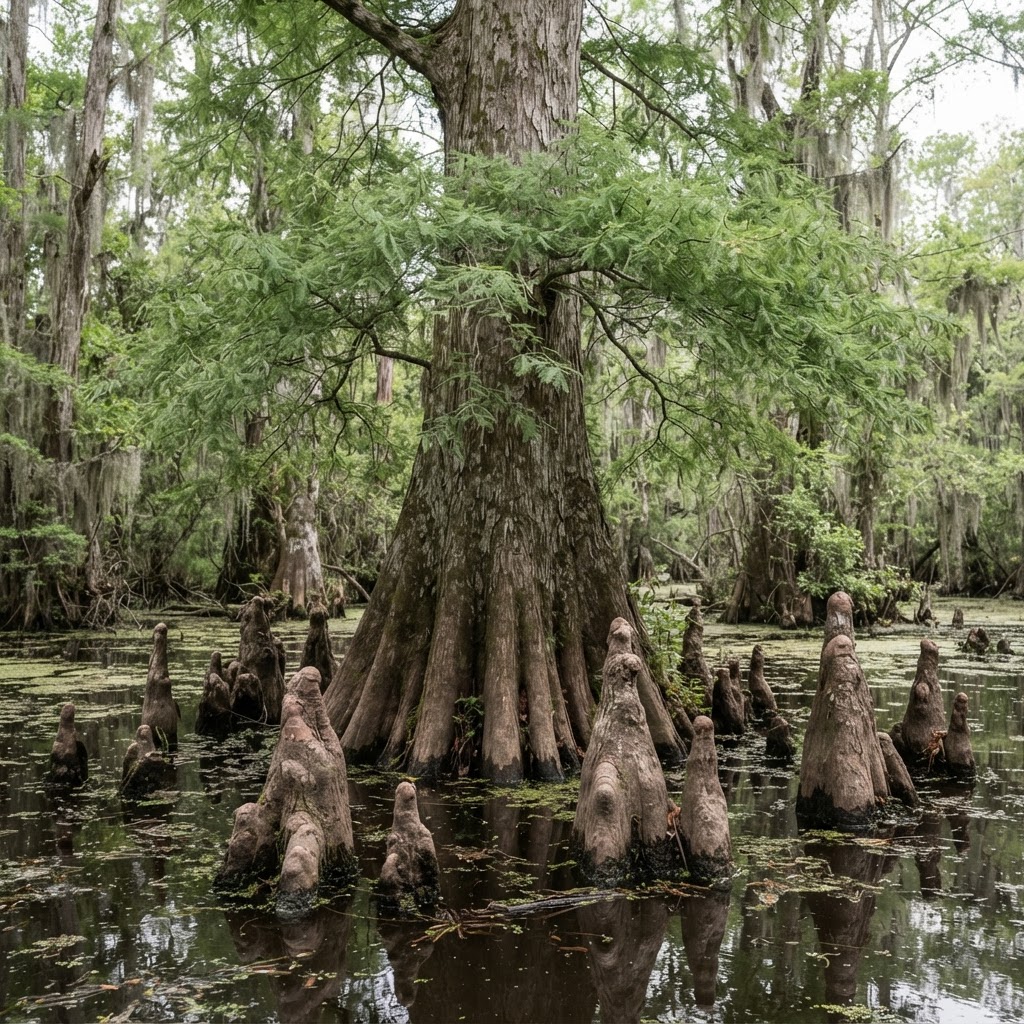
Bald Cypress
Taxodium proanthocyanidins chelate the zinc ion at the active site of MMP-1 and MMP-9, directly inhibiting the collagenase and elastase activity that degrades the dermal matrix.
Mustang Grape
Resveratrol activates SIRT1 in dermal fibroblasts, upregulating collagen type I and elastin gene expression while protecting existing fibers from UV-induced oxidation.
Magnolia
Magnolol inhibits AP-1 transcription factor activation, the upstream driver of multiple matrix metalloproteinases in photoaged skin.
Pennywort
Asiaticoside stimulates type I collagen transcription and re-epithelialization, directly increasing the density of the dermal collagen network.
Dollarweed
Hydrocotyloside triterpenes enhance fibroblast proliferation and hyaluronic acid synthesis, restoring dermal hydration and turgor.
Plant antioxidants protect existing skin fibers from breaking down while encouraging the skin to build fresh, elastic structural proteins that keep it firm.
Plants & Trees that treat it
Click any specimen to open its pharmacognostic monograph.
Academic Citations
- 1.Fine AM. Oligomeric proanthocyanidin complexes: history, structure, and some clinical applications. Altern Med Rev. 2000;5(2):144-151.
- 2.Mukherjee PK, Maity N, Nema NK, Sarkar BK. Bioactive compounds from natural resources against skin aging. Phytomedicine. 2011;19(1):64-73.
- 3.Baur JA, Sinclair DA. Therapeutic potential of resveratrol: the in vivo evidence. Nat Rev Drug Discov. 2006;5(6):493-506.
- 4.Fraga CG, Galleano M, Verstraeten SV, Oteiza PI. Basic biochemical mechanisms behind the health benefits of polyphenols. Mol Aspects Med. 2010;31(6):435-445.