The Condition
Diabetes mellitus is a metabolic disorder characterized by chronic hyperglycemia resulting from insulin deficiency, insulin resistance, or both, leading to vascular, renal, retinal, and neuropathic complications.
How the Plant Resolves It
Ellagitannins and gallic acid derivatives competitively inhibit intestinal α-glucosidase and pancreatic α-amylase to slow carbohydrate absorption, flatten postprandial glucose surges, and activate cellular peroxisome proliferator-activated receptor gamma (PPAR-γ) to optimize peripheral insulin sensitivity and cellular glucose uptake.
- 1.Ellagitannins inhibit intestinal α-glucosidase and pancreatic α-amylase.
- 2.Carbohydrate absorption slows, flattening postprandial glucose surges.
- 3.PPAR-γ is activated, improving insulin sensitivity and glucose uptake.
How Each Specimen Contributes
Mustang Grape
Resveratrol and ellagitannins competitively inhibit intestinal α-glucosidase, slowing the breakdown of complex carbohydrates into absorbable glucose and flattening postprandial spikes.
American Persimmon
Proanthocyanidins and betulinic acid inhibit pancreatic α-amylase, reducing the rate of starch digestion and glucose delivery to the portal circulation.
Prickly Pear
Opuntia polysaccharides and betalains activate PPAR-γ in skeletal muscle and adipose tissue, increasing GLUT4 translocation and peripheral glucose uptake.
Wax Myrtle
Myricetin and myricitrin inhibit protein tyrosine phosphatase 1B (PTP1B), preventing the dephosphorylation of the insulin receptor and sustaining insulin signaling.
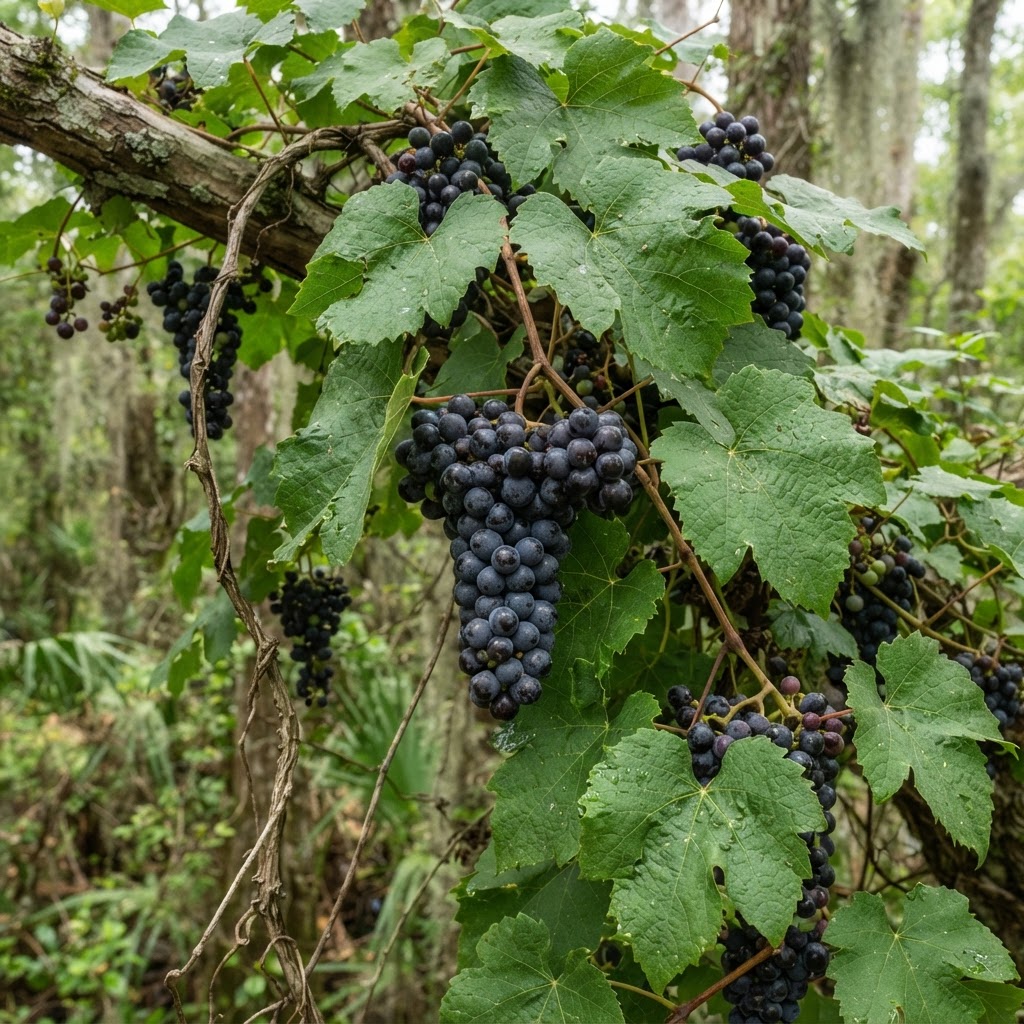
Muscadine Grape
Ellagic acid and quercetin protect pancreatic beta-cell mitochondria from glucolipotoxicity, preserving insulin secretion capacity under chronic hyperglycemic stress.
Plant extracts slow down how fast your body absorbs sugar and help your cells respond better to insulin to keep blood sugar steady.
Plants & Trees that treat it
Click any specimen to open its pharmacognostic monograph.
Academic Citations
- 1.Amiot MJ, Riva C, Vinet A. Effects of dietary polyphenols on metabolic syndrome features in humans: a systematic review. Obes Rev. 2016;17(7):573-586.
- 2.Del Rio D, Rodriguez-Mateos A, Spencer JPE, et al. Dietary (poly)phenolics in human health. Antioxid Redox Signal. 2013;18(14):1818-1892.
- 3.Pandey KB, Rizvi SI. Plant polyphenols as dietary antioxidants in human health and disease. Oxid Med Cell Longev. 2009;2(5):270-278.
- 4.Manach C, Williamson G, Morand C, et al. Bioavailability and bioefficacy of polyphenols in humans. Am J Clin Nutr. 2005;81(1 Suppl):230S-242S.