The Condition
Essential hypertension is a chronic cardiovascular condition defined by persistently elevated arterial blood pressure (≥130/80 mmHg) resulting from increased vascular resistance, endothelial dysfunction, and dysregulation of the renin-angiotensin-aldosterone system.
How the Plant Resolves It
Stilbenes, proanthocyanidins, and triterpenoids act on vascular smooth muscle by opening potassium channels and enhancing endothelial-derived relaxing factors, lowering systemic arterial pressure and mitigating chronic pressure overload on the myocardium.
- 1.Stilbenes and proanthocyanidins open potassium channels in vascular smooth muscle.
- 2.Endothelial-derived relaxing factors increase.
- 3.Systemic arterial pressure drops, relieving pressure overload on the heart.
How Each Specimen Contributes
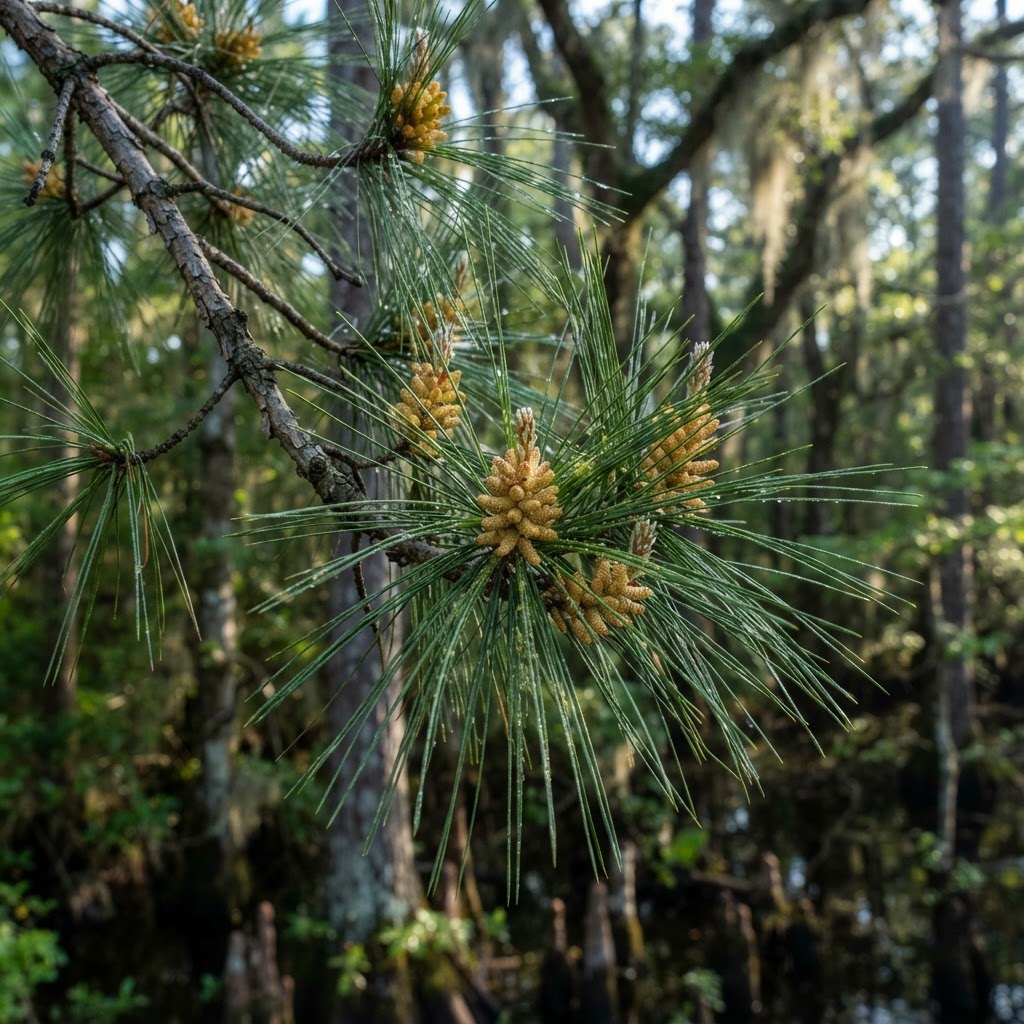
Pine
Pycnogenol stimulates eNOS via PI3K/Akt, increasing nitric oxide bioavailability and producing endothelium-dependent vasodilation of resistance arteries.
Bald Cypress
Taxodione opens calcium-activated potassium channels in vascular smooth muscle, hyperpolarizing the membrane and relaxing the contractile apparatus.
Mustang Grape
Resveratrol inhibits NADPH oxidase, reducing superoxide that would otherwise scavenge NO, thereby preserving the vasodilatory signal.
Muscadine Grape
Ellagic acid inhibits angiotensin-converting enzyme (ACE), reducing angiotensin II production and lowering both vasoconstriction and aldosterone-driven volume expansion.
Southern Live Oak
Ellagitannins block the endothelin-1 signaling pathway, reducing the potent vasoconstrictor that contributes to elevated systemic resistance.
Botanical extracts tell arterial walls to relax and open up, which drops high blood pressure and takes the constant strain off the heart.
Plants & Trees that treat it
Click any specimen to open its pharmacognostic monograph.
Academic Citations
- 1.Vita JA. Polyphenols and cardiovascular disease: effects on nitric oxide bioavailability. Am J Clin Nutr. 2005;81(1 Suppl):292S-297S.
- 2.Baur JA, Sinclair DA. Therapeutic potential of resveratrol: the in vivo evidence. Nat Rev Drug Discov. 2006;5(6):493-506.
- 3.Das M, Das DK. Resveratrol and cardiovascular health. Mol Aspects Med. 2010;31(6):503-512.
- 4.Rahman I, Biswas SK, Kirkham PA. Regulation of inflammation and redox signaling by dietary polyphenols. Biochem Pharmacol. 2006;72(11):1439-1452.