The Condition
Chronic wound healing impairment is the failure of cutaneous ulcers to proceed through the normal phases of hemostasis, inflammation, proliferation, and remodeling, often due to infection, ischemia, diabetes, or sustained inflammation.
How the Plant Resolves It
Triterpene fractions and gallotannins stimulate fibroblast proliferation, upregulate vascular endothelial growth factor (VEGF)-mediated angiogenesis, and cross-link extracellular collagen matrices to accelerate granulation tissue formation and re-epithelialization in compromised ulcers.
- 1.Triterpene fractions and gallotannins stimulate fibroblast proliferation.
- 2.VEGF-mediated angiogenesis is upregulated.
- 3.Collagen matrices cross-link, accelerating granulation and re-epithelialization.
How Each Specimen Contributes
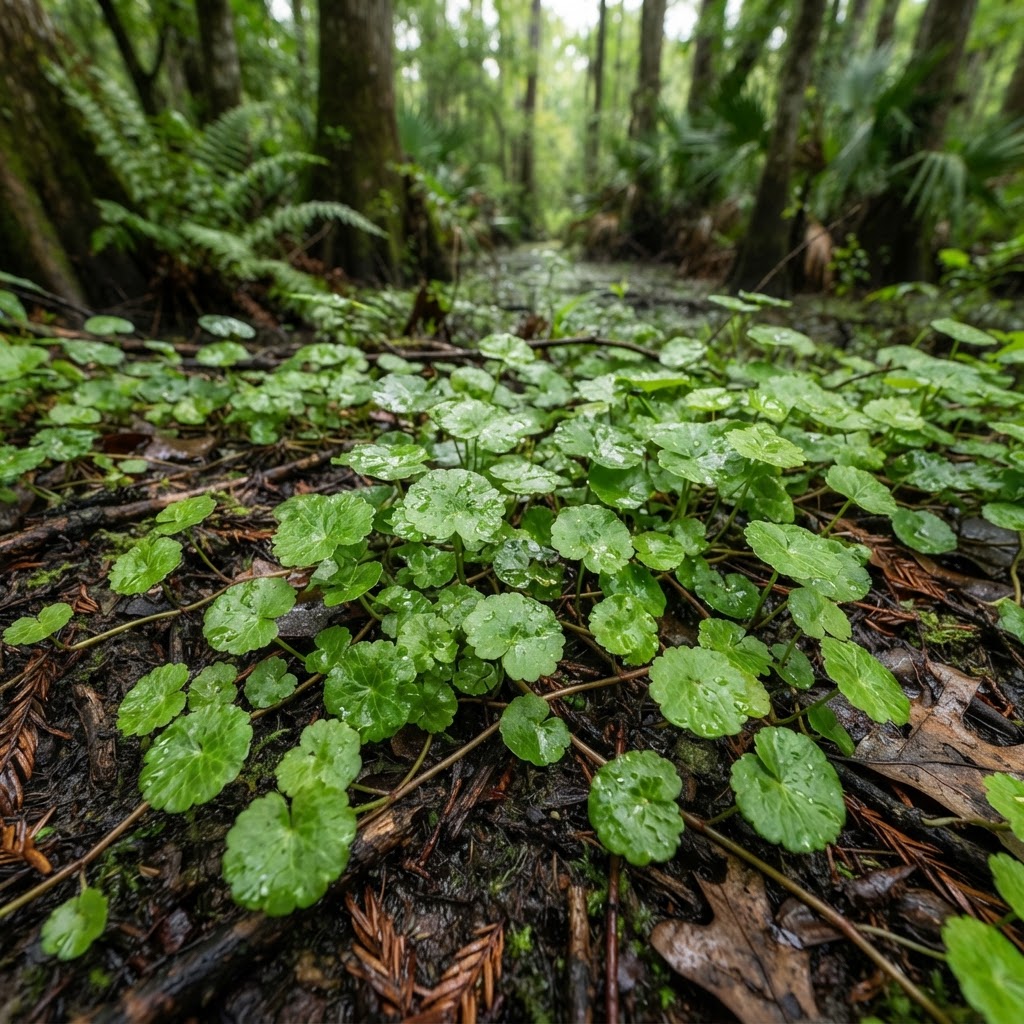
Pennywort
Asiaticoside and madecassoside stimulate fibroblast proliferation and upregulate VEGF expression, promoting angiogenesis and the granulation tissue formation that fills chronic ulcer beds.
Dollarweed
Hydrocotyloside triterpenes enhance collagen synthesis and cross-linking, accelerating the re-epithelialization that closes non-healing dermal wounds.
American Persimmon
Proanthocyanidins and betulinic acid reduce the excess MMP activity in chronic wound fluid, protecting the newly deposited collagen from premature degradation.
Southern Live Oak
Gallotannins cross-link with wound-bed collagen, providing structural reinforcement and reducing the tissue fragility that delays healing in chronic ulcers.
American Sycamore
Astringent tannins reduce the bacterial bioburden in chronic wounds, clearing the microbial colonization that prevents the inflammatory phase from resolving.
Active tree compounds speed up cellular repair, boost new blood vessel growth, and help stubborn skin wounds close and heal much faster.
Plants & Trees that treat it
Click any specimen to open its pharmacognostic monograph.
Academic Citations
- 1.Mukherjee PK, Maity N, Nema NK, Sarkar BK. Bioactive compounds from natural resources against skin aging. Phytomedicine. 2011;19(1):64-73.
- 2.Bedi MK, Shenefelt PD. Herbal therapy in dermatology. Arch Dermatol. 2002;138(2):232-238.
- 3.Fine AM. Oligomeric proanthocyanidin complexes: history, structure, and some clinical applications. Altern Med Rev. 2000;5(2):144-151.
- 4.Fraga CG, Galleano M, Verstraeten SV, Oteiza PI. Basic biochemical mechanisms behind the health benefits of polyphenols. Mol Aspects Med. 0;31(6):435-445.