The Condition
Xerosis cutis is a dermatological condition of severe skin dryness caused by impaired stratum corneum barrier function, reduced lipid lamellae, and increased transepidermal water loss, leading to fissuring and inflammation.
How the Plant Resolves It
Lipophilic plant sterols and botanical mucilages integrate into the stratum corneum intercellular lipid lamellae, reinforcing the epidermal moisture barrier, minimizing transepidermal water loss (TEWL), and mitigating keratinocyte micro-cracking.
- 1.Plant sterols and mucilages integrate into stratum corneum lipid lamellae.
- 2.The epidermal moisture barrier is reinforced.
- 3.Transepidermal water loss is minimized and keratinocyte cracking mitigated.
How Each Specimen Contributes
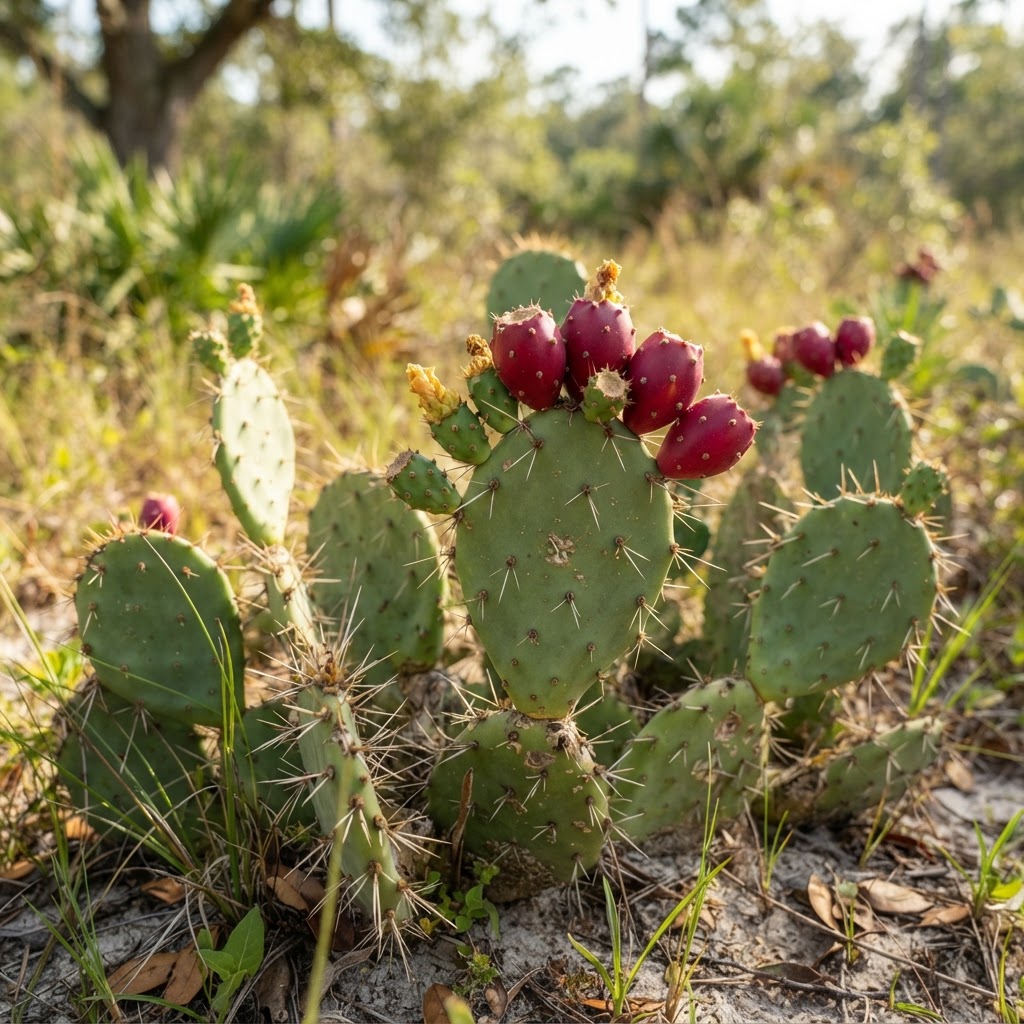
Prickly Pear
Opuntia mucilages and phytosterols integrate into the intercellular lipid lamellae of the stratum corneum, reinforcing the moisture barrier and reducing transepidermal water loss (TEWL).
Sabal Palm
Lipophilic phytosterols replenish the ceramide and cholesterol content of the stratum corneum, restoring the lipid matrix that prevents desiccation.
Peppergrass
Glucosinolate-derived isothiocyanates induce filaggrin expression in keratinocytes, increasing the natural moisturizing factor (NMF) that maintains stratum corneum hydration.
American Persimmon
Proanthocyanidins protect the sebum lipid fraction from oxidation, preserving the skin's natural emollient barrier against environmental desiccation.
Wild Violet
Rutin and mucilage polysaccharides soothe keratinocyte micro-cracking and reduce the inflammation that accompanies severe xerotic skin.
Protective plant fats and mucilages seal deep moisture into dry skin, repairing the skin barrier and stopping painful flaking and cracking.
Plants & Trees that treat it
Click any specimen to open its pharmacognostic monograph.
Academic Citations
- 1.Mukherjee PK, Maity N, Nema NK, Sarkar BK. Bioactive compounds from natural resources against skin aging. Phytomedicine. 2011;19(1):64-73.
- 2.Draelos ZD. Botanicals as topical agents. Clin Dermatol. 2001;19(4):479-486.
- 3.Fraga CG, Galleano M, Verstraeten SV, Oteiza PI. Basic biochemical mechanisms behind the health benefits of polyphenols. Mol Aspects Med. 2010;31(6):435-445.
- 4.Pandey KB, Rizvi SI. Plant polyphenols as dietary antioxidants in human health and disease. Oxid Med Cell Longev. 2009;2(5):270-278.